

Offering a comprehensive warranty on vacuum tubes is easier said than done. Tubes break. Some tubes break faster than others. At Ray Tubes, we put in the hard work upfront to guarantee our tubes will work as they should, for as long as they should. You might think our methods are overly laborious, but quality control matters. We don’t want flawed tubes reaching the hands of our customers and we’ll go the extra mile to make sure that doesn’t happen. Poor quality means a substandard listening experience, it means potential damage to your equipment, and it means buying replacement tubes early, time after time. We believe in doing things right the first time. That’s why our quality control process is the way it is and that’s why we can offer our warranty with confidence.
The Ray Tubes 7-Step Quality Control Process
Our current baseline process is divided into seven steps across three quality control phases. For specific tubes and variants, we go even further with specialized tests. Our quality control takes place immediately after manufacturing, before the tubes are sent to be screen printed with our logo and packaged. This ensures that every tube bearing our name has met our rigorous standards.
It's a common misconception that New Old Stock (NOS) tubes are inherently more reliable than new production. In truth, this is an example of survivorship bias. The NOS tubes that you can find today have, by definition, survived the test of time. Many other tubes manufactured in the mid-20th century failed early and were discarded. What does that mean for new production? Simple: if we do the work of identifying which tubes are reliable and which will fail early, we can produce new tubes that are just as reliable as NOS.
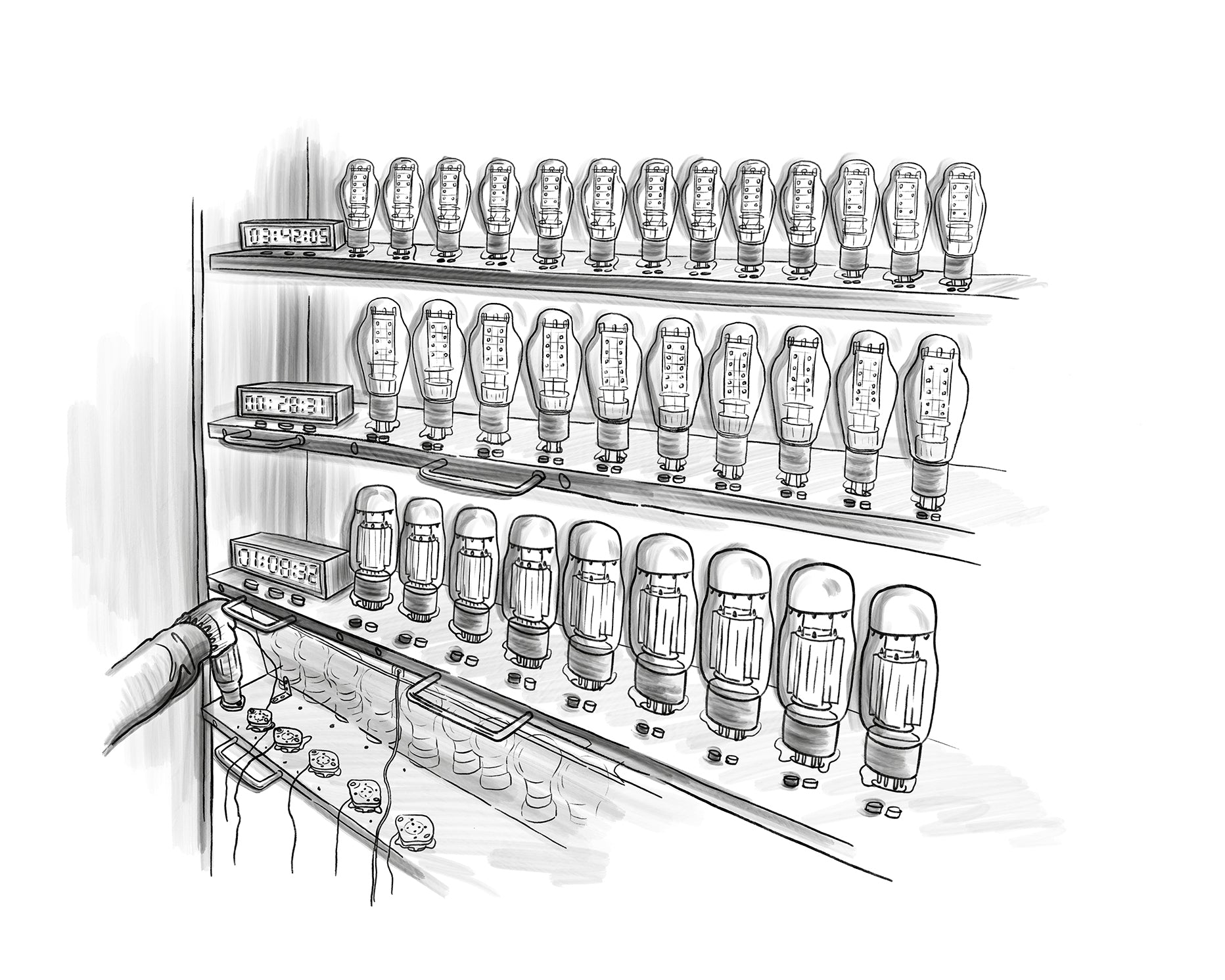
Phase One: Reliability & Longevity
In this phase, we verify that each tube is structurally sound. These steps expose manufacturing defects and reveal faulty tubes early. These are the sorts of problems that cause unwanted background noise, popping, and even damage to your audio equipment. That's why it's important we catch them early.
You can think of phase one as asking the question: do these tubes meet our strict standards for reliability, longevity, and safety? Tubes that fail these tests are discarded and recycled for parts.
STEP 1: SOLDERING INSPECTION.
We inspect the soldering of each pin under a microscope. Imperfect soldering leads to broken seals in the vacuum or outright failure. If the soldering isn't right, the tube doesn't make the cut.
STEP 2: BURN-IN.
Each tube undergoes a 24-hour burn-in period. This stabilizes the components and exposes early failures. You can think of it as a sort of early detection test, uncovering symptoms that are harmless now but will cause problems further down the line. If a tube fails, it doesn’t make the cut.
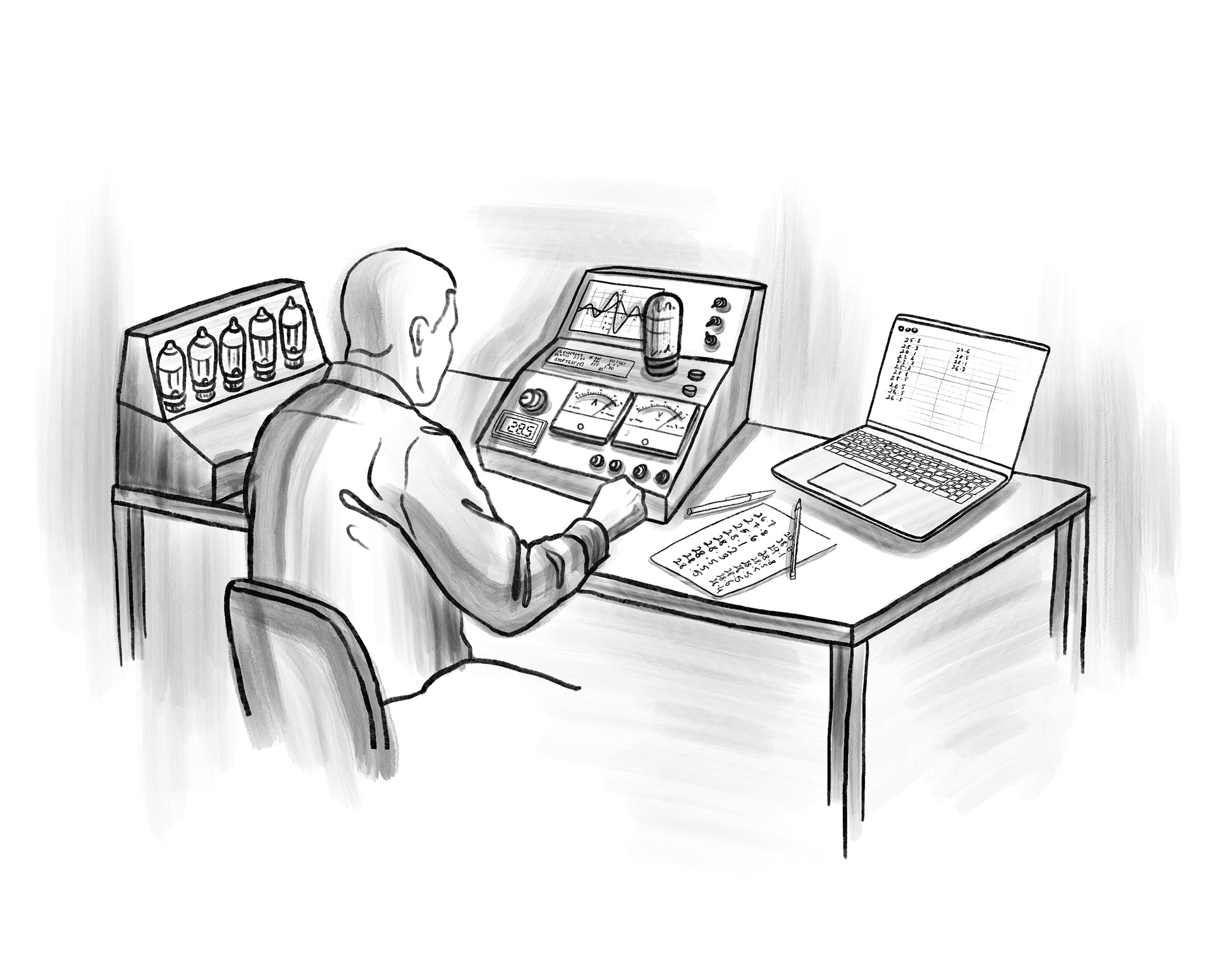
Phase Two: Nuance & Finesse
Audio applications require more finesse than most. Unlike most medical or military uses, the incoming signal is complex and fluctuating. That means audio tubes need to handle a wide range of inputs well. In this phase, we measure a bevy of parameters to ensure that each tube is up to that task. This also enables us to match tubes as pairs or quads. Tubes that fail in this phase would work in your amp, but they'd produce inconsistent or underwhelming sound. That's not good enough for us.
You can think of this phase as asking the question: do these tubes meet our expectations when it comes to reproducing the texture and nuance of recorded music? Tubes that fail these steps are repurposed for other applications.
STEP 3: CRITICAL PARAMETER MEASUREMENT.
We test every tube against critical parameters like amplification factor and internal resistance. All measurements are recorded under the tube's unique serial number. If the tube fails a single test, it doesn’t make the cut.
STEP 4: CONSISTENT MATCHING.
Using industrial-grade instruments, we measure current draw to ensure accurate matching. Each channel has to deliver consistent sound quality and volume. If it doesn’t, the tube doesn’t make the cut.
STEP 5: MICROPHONICS TEST.
We subject the tubes to physical stress to check for microphonics. This confirms they maintain low noise levels, even in tough conditions. If they don’t, they don’t make the cut.
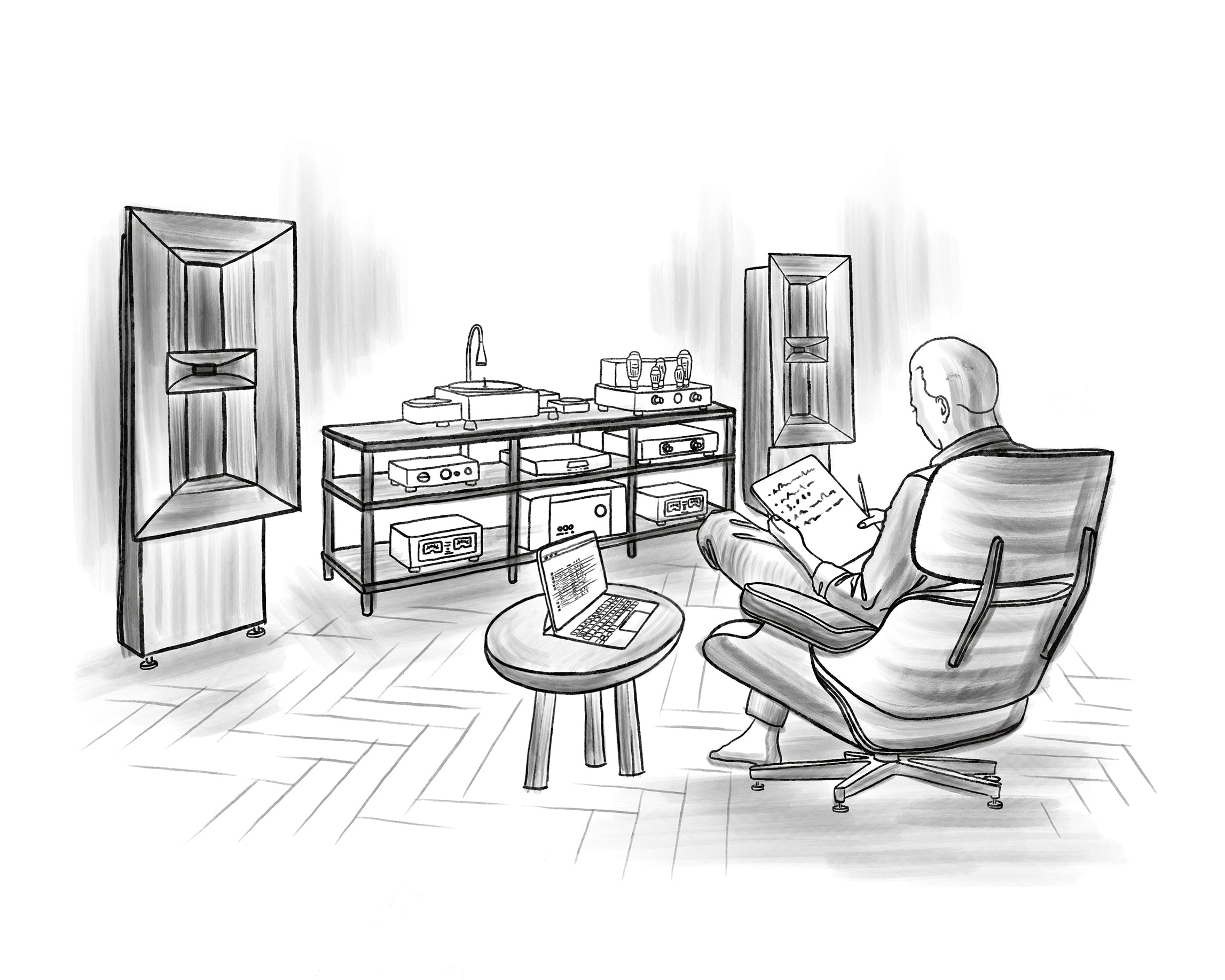
Phase Three: Je ne sais quoi
Finally, phase three is the cherry on top. No matter how many measurements we take, a tube that looks good on paper might still fail to wow us. Tube audio is a subjective phenomenon. Objective tests simply aren't enough. That's why we test our tubes under real-world conditions. If you've ever listened to a tube and thought "it's not bad, but…", you already understand the purpose of these steps.
This phase asks the simple question: are these tubes really good enough for Ray Tubes?
STEP 6: AMPLIFIER TEST.
Tubes are installed in two-channel speaker amplifiers to assess real-world performance. Our sound engineers listen to them using calibrated audio equipment to ensure they meet our standards. If they don’t, they don’t make the cut.
STEP 7: AN EXPERT OPINION.
Finally, we randomly select tubes that have passed all tests for targeted listening sessions. If the tube doesn't meet our expectations? You know what happens.
Think you know better?
Quality isn't incidental. It's the result of decades of accumulated experience, deliberate planning, and fastidious tweaking. That means our process is constantly evolving, because we’re not ones to rest on our laurels. If there are improvements to be found, we’ll find them. We’re relentless like that. The process today may not be the process tomorrow, and that’s a good thing. We do the work so you get a product that works.
Think you know better? Let us know.